

Peppermint Essential Oil
Mentha × piperita
Uses & Benefits
Peppermint essential oil is steam-distilled from the leaves and flowering tops of peppermint, a natural hybrid of water mint and spearmint. Menthol and menthone give it a powerful cooling sensation, sharp mint aroma, and distinctive topical identity. It is valued mainly for temporary cooling comfort, aromatic freshness, limited insect-deterrent support, and selected antimicrobial activity.
Cooling Comfort & Sensory Relief
• Menthol activates cold-sensitive receptors, producing a cooling sensation without actually lowering tissue temperature.
• Properly diluted peppermint oil may temporarily ease the perception of minor muscular tension, heaviness, or everyday discomfort.
• Its cooling effect can feel refreshing on hot, tired, or overworked areas.
• It does not heal injuries, reduce structural inflammation, or replace appropriate care for severe or persistent pain.
Scalp Freshness & Hair-Care Use
• Peppermint oil creates a pronounced cooling, invigorating sensation on the scalp.
• Its aroma and sensory effect can make oily or heavy-feeling scalp formulas feel fresher.
• Animal research has explored peppermint oil and hair growth, but reliable human evidence is insufficient to claim that it regrows hair or treats hair loss.
• It does not directly condition the hair shaft; softness and slip come primarily from the surrounding carrier oils or conditioning ingredients.
Purifying & Deodorizing Support
• Laboratory studies show activity against selected bacteria and fungi.
• This research supports its use in cleansing, deodorizing, and freshening formulas.
• Laboratory antimicrobial activity does not establish peppermint oil as a treatment for acne, dandruff, fungal infection, or other skin conditions.
• It is not a broad-spectrum preservative and cannot protect water-containing formulas from microbial contamination.
Insect-Deterrent Potential
• Peppermint oil has demonstrated repellency against selected mosquitoes and other nuisance insects in laboratory studies.
• Its strong volatile aroma may contribute short-lived deterrent activity in outdoor preparations.
• Performance varies with concentration, formulation, evaporation rate, insect species, and environmental conditions.
• Peppermint should not be represented as preventing insect-borne disease without finished-product efficacy and regulatory testing.
Aromatic Freshness
• Its piercing mint aroma creates an awakening, clean, and energizing sensory experience.
• Peppermint is naturally more menthol-rich and intensely cooling than spearmint.
• The essential oil is much more concentrated than peppermint tea, hydrosol, or whole-leaf infusion.
• Small amounts can dominate a fragrance blend, so careful dosing is important.
Dilution, Sensitivity & Safe Use
• Concentrated peppermint oil and menthol can cause burning, irritation, or allergic contact reactions.
• Avoid undiluted use on the face, near the eyes, mucous membranes, extensively broken skin, or highly reactive areas.
• Use particular caution around infants and young children because menthol-rich products near the face can cause serious breathing-related reactions.
• Peppermint oil should be kept away from pets that may lick the application area and stored securely to prevent accidental ingestion.
• Oxidized oil may become more irritating, so protect it from heat, light, and prolonged air exposure.
Botanical Origins & Traditional Use
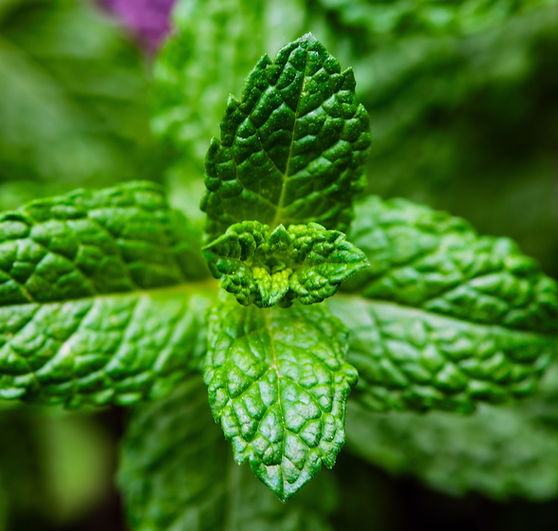
Peppermint is a naturally occurring hybrid of water mint and spearmint, associated with Europe and extending into Central Asia. Because it is a hybrid, it is commonly propagated through runners or cuttings rather than relied upon to reproduce true from seed. Its dark green leaves contain tiny oil glands that release an unmistakable cooling aroma when crushed.
Mint leaves were long used in European and Middle Eastern food, tea, bathing, and household preparations, but peppermint became especially valuable once its unusually high menthol content distinguished it from milder mints. Steam distillation concentrated that cooling chemistry into an oil used in confectionery, perfumery, oral preparations, massage products, and aromatic remedies.
Its modern topical role still depends on that same immediate sensory effect. Peppermint does not physically chill the skin; menthol changes how temperature is perceived by activating cold receptors. That memorable cooling response explains why the oil remains useful in carefully diluted formulas designed to feel refreshing, clarifying, and invigorating.
Resources / Further Reading
• Kew Science – Mentha × piperita L. | Plants of the World Online | Kew Science
https://powo.science.kew.org/taxon/urn%3Alsid%3Aipni.org%3Anames%3A450969-1/general-information
Confirms peppermint’s accepted hybrid identity, parent species, native range, morphology, and traditional food use.
• European Medicines Agency – Menthae piperitae aetheroleum
https://www.ema.europa.eu/en/medicines/herbal/menthae-piperitae-aetheroleum
Provides the European herbal assessment of peppermint essential oil, including traditional uses and important safety considerations.
• PubMed – Menthol: Effects on Cutaneous Thermosensation and Pain
https://pubmed.ncbi.nlm.nih.gov/31351014/
Reviews how menthol activates cold-sensitive receptors and influences cooling and discomfort perception.
• PubMed – Peppermint Oil Promotes Hair Growth Without Toxic Signs
https://pubmed.ncbi.nlm.nih.gov/25584150/
Reports an animal study on topical peppermint oil and hair growth, illustrating why the evidence should not be presented as proven in humans.
• PubMed – Plant-Based Insect Repellents: A Review of Their Efficacy, Development and Testing
https://pubmed.ncbi.nlm.nih.gov/21411012/
Reviews botanical insect repellents and the limitations affecting essential-oil duration and real-world protection.
• PubMed – Allergic Contact Dermatitis From Menthol and Peppermint Oil
https://pubmed.ncbi.nlm.nih.gov/18580799/
Documents the potential for peppermint oil and menthol to cause allergic contact reactions.